
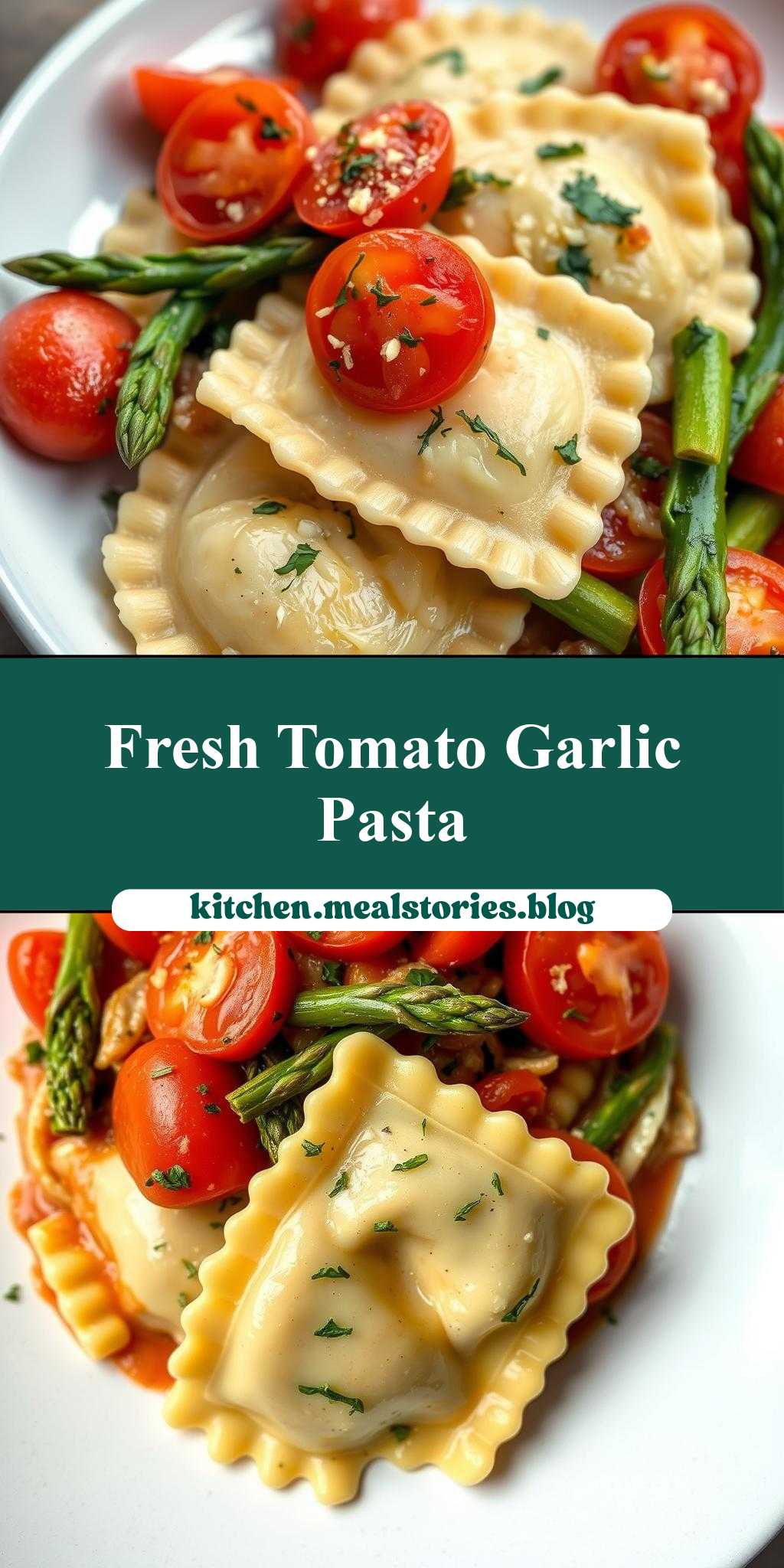
What makes a perfect spring dinner? Fresh asparagus and juicy tomatoes come together in this quick and easy homemade ravioli recipe, infused with aromatic garlic and herbs, perfect for a weeknight dinner. Save this idea for a delicious family favorite meal.
Ravioli with Tomatoes, Asparagus, Garlic, and Herbs
Introduction
Ravioli with Tomatoes, Asparagus, Garlic, and Herbs is a dish that embodies the essence of spring and summer, combining the freshness of asparagus, the sweetness of cherry tomatoes, the pungency of garlic, and the earthiness of herbs, all wrapped up in tender, homemade ravioli. This recipe is not just about the flavors; it’s about the simplicity and creativity that can be achieved with everyday ingredients. Whether you’re a seasoned chef or a beginner in the kitchen, this dish promises to delight your senses and leave you wanting more. The beauty of this recipe lies in its ease of preparation, the impressive results it yields with minimal effort, and the endless possibilities for customization to suit any palate.
Why This Works
- Flavor balance and ingredient accessibility: The combination of tomatoes, asparagus, garlic, and herbs creates a harmonious balance of flavors that is both refreshing and satisfying. Furthermore, these ingredients are widely available, making this dish accessible to anyone, anywhere.
- Ease of preparation: Despite the homemade ravioli, which might seem daunting, this recipe is surprisingly easy to prepare. With a few simple steps and some basic kitchen tools, you can create a dish that looks and tastes like it came from a professional kitchen.
- Impressive results with minimal effort: The key to this recipe is in its layering of flavors and textures. By cooking the ravioli, sautéing the asparagus and garlic, and then combining everything with fresh cherry tomatoes and herbs, you achieve a dish that is not just delicious but also visually appealing, making it perfect for special occasions or everyday meals.
Key Ingredients
The main ingredients for this recipe include homemade ravioli dough, asparagus, cherry tomatoes, garlic, fresh herbs like basil or parsley, olive oil, salt, and pepper. For the ravioli filling, you can use a combination of ricotta cheese, Parmesan cheese, and an egg. Practical substitutions can be made for the herbs and the type of cheese used in the filling, allowing for a degree of creativity and flexibility. For instance, spinach or kale can be used instead of herbs for a different flavor profile, and other cheeses like mozzarella or goat cheese can add unique twists to the dish.
Instructions
- Step 1: Begin by preparing your ingredients. This includes making the ravioli dough from scratch, which involves combining flour, eggs, and a pinch of salt, then kneading the mixture until it forms a smooth, elastic dough. Let the dough rest for at least 30 minutes before rolling it out into thin sheets. Meanwhile, chop the asparagus into bite-sized pieces, halve the cherry tomatoes, mince the garlic, and chop the fresh herbs.
- Step 2: Cook the ravioli in boiling, salted water until they float to the surface. This should take about 3-5 minutes, depending on the thickness of your ravioli. While the ravioli is cooking, heat some olive oil in a large skillet over medium heat. Add the minced garlic and cook for about 1 minute until fragrant, then add the asparagus and cook until it starts to soften, about 3-4 minutes.
- Step 3: Once the asparagus has started to soften, add the halved cherry tomatoes to the skillet. Season with salt, pepper, and a sprinkle of chopped fresh herbs. Continue to cook for another 2-3 minutes, allowing the flavors to meld together and the tomatoes to release their juices. By this time, your ravioli should be done. Drain them in a colander and add them to the skillet with the asparagus and tomato mixture. Toss everything together gently to combine, ensuring the ravioli is well coated with the sauce.
- Step 4: For the final touches, serve the ravioli hot, topped with additional chopped herbs if desired, and a sprinkle of Parmesan cheese. You can also drizzle some extra olive oil over the top for added richness and flavor. Plating is key, so consider arranging the ravioli in a pattern on the plate and garnishing with a sprig of fresh herb for a pop of color and freshness.
Handy Tips
- Avoid overcooking the ravioli, as it can become mushy and unappetizing. The key is to cook it until it just floats to the surface, then immediately drain it to stop the cooking process.
- For an added crunch, consider topping the dish with toasted pine nuts or almonds. This adds a satisfying texture contrast to the soft ravioli and vegetables.
- Substitutions can greatly impact the flavor and texture of the dish. For example, using frozen ravioli can save time but may lack the freshness and texture of homemade. Similarly, different types of cheese and herbs can alter the flavor profile significantly, so feel free to experiment to find your favorite combinations.
Heat Control
Heat control is crucial in this recipe, especially when cooking the garlic and asparagus. It’s important to cook over medium heat to prevent burning the garlic, which can quickly become bitter and overpowering. For the asparagus, medium heat allows for a gentle sauté that preserves its crispness and color. When adding the cherry tomatoes, reduce the heat slightly to prevent them from cooking too quickly and losing their shape. Ideal doneness is achieved when the asparagus is tender but still crisp, the garlic is fragrant but not burnt, and the cherry tomatoes are soft but still retain some firmness.
Crunch Factor
The crunch factor in this dish comes from the slightly undercooked asparagus and the toasted nuts or seeds used as a topping. To achieve the perfect crunch, cook the asparagus until it just starts to soften, then remove it from the heat. This way, it retains some of its natural crispness. For the topping, toast the nuts or seeds in a dry pan over low heat, stirring frequently, until they are lightly browned and fragrant. This adds a satisfying crunch and depth of flavor to the dish.
Pro Kitchen Tricks
- Use a variety of colors: Incorporating a variety of colored ingredients, such as cherry tomatoes, asparagus, and fresh herbs, can make the dish visually appealing and appetizing.
- Don’t overmix: When making the ravioli dough, avoid overmixing, as this can lead to a tough, chewy texture. Stop mixing once the ingredients come together in a cohesive ball.
- Experiment with fillings: The beauty of homemade ravioli is the ability to experiment with different fillings. Consider using spinach and ricotta, butternut squash, or even meat fillings like pork or beef for a hearty twist.
Storage Tips
- Leftover ravioli can be stored in an airtight container in the refrigerator for up to 3 days. Reheat gently in boiling water or in a skillet with some olive oil until warmed through.
- For longer storage, consider freezing the uncooked ravioli on a baking sheet, then transferring them to a freezer-safe bag or container for up to 3 months. Cook frozen ravioli in boiling water for about 5 minutes, or until they float to the surface.
- When reheating, add a splash of water or olive oil to prevent the ravioli from sticking together. Also, be gentle when reheating to avoid breaking the delicate pasta.
Gift Packaging Ideas
If you’re considering gifting this dish, perhaps for a dinner party or as a care package, consider packaging it in a decorative jar or container. Layer the cooked ravioli with the tomato and asparagus mixture, topping with fresh herbs and a sprinkle of cheese. Wrap the jar in a ribbon or twine, and include a handwritten recipe card for a personal touch. For a more rustic approach, pack the ravioli and sauce in a wooden crate or a woven basket, adding some fresh flowers or greenery for a charming, homespun feel.
Flavor Variations
- Different spices: Add some red pepper flakes for a spicy kick, or use smoked paprika for a smoky depth of flavor.
- Creative toppings: Consider using grilled chicken, toasted pine nuts, or a dollop of sour cream as toppings to add protein, crunch, and creaminess.
- Ingredient swaps: Swap the asparagus for zucchini or bell peppers for a different texture and flavor. You can also use different types of cheese, such as mozzarella or feta, for a unique twist on the traditional ricotta and Parmesan combination.
Troubleshooting
- Texture problems: If your ravioli becomes too soft or mushy, it may be due to overcooking. Try cooking them for a shorter time or using a slightly firmer dough.
- Ingredient replacements: If you can’t find fresh asparagus, consider using frozen or canned as a substitute. However, fresh ingredients will always yield the best flavor and texture.
- Over/undercooking signs: Check your ravioli frequently while they’re cooking to avoid overcooking. They should float to the surface when done. For the asparagus and garlic, check for tenderness and fragrance, respectively, to ensure they’re cooked to perfection.
FAQs
- Can I freeze it? Yes, you can freeze the uncooked ravioli for up to 3 months. Cook frozen ravioli in boiling water for about 5 minutes, or until they float to the surface.
- Is it gluten-free? Traditional ravioli dough contains gluten due to the wheat flour. However, you can make a gluten-free version by substituting the wheat flour with gluten-free flours like rice, almond, or coconut flour.
- Can I double the recipe? Yes, you can easily double or triple this recipe to feed a larger crowd. Just be sure to adjust the cooking time slightly if using a larger quantity of ravioli.
Conclusion
Ravioli with Tomatoes, Asparagus, Garlic, and Herbs is a dish that celebrates the simplicity and elegance of Italian cuisine. With its balanced flavors, vibrant colors, and satisfying textures, it’s perfect for any occasion, from a quick weeknight dinner to a special celebration. Don’t be afraid to experiment and make this recipe your own, whether that means trying different fillings, sauces, or toppings. The joy of cooking lies in its creativity and sharing, so enjoy the process, and buon appetito!