
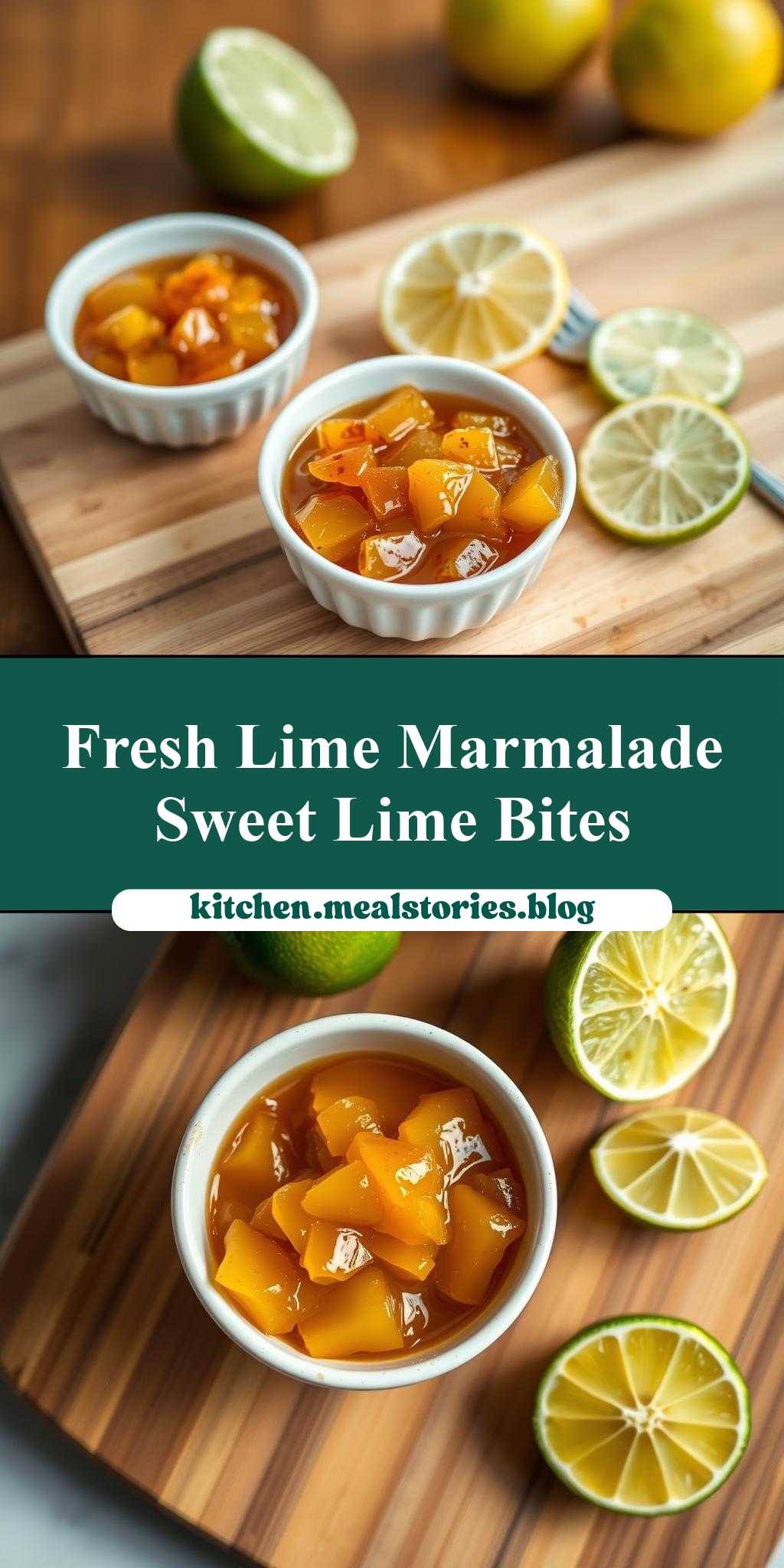
What makes a perfect breakfast spread even better? A tangy homemade lime marmalade made with fresh lime juice and sugar, paired with toast or scones for a quick and easy morning treat, save this idea for a delicious weeknight dinner side or family favorite topping, try it soon
lime marmalade in small bowls on a cutting board
Introduction
Imagine a world where the brightness of citrus meets the simplicity of homemade preserves, all beautifully presented in small bowls on a cutting board. Welcome to the delightful realm of lime marmalade, where the ease of preparation, the burst of flavor, and the creativity of using everyday ingredients come together in perfect harmony. This recipe is not just about creating a delicious condiment; it’s about exploring the possibilities of flavor and presentation that elevate any dish or gathering. With lime marmalade, you’re not just making a preserve; you’re crafting an experience that’s as much about the joy of creation as it is about the pleasure of sharing.
Why This Works
- Flavor balance and ingredient accessibility: The combination of limes, sugar, and water creates a perfectly balanced flavor profile that’s both tangy and sweet, using ingredients that are readily available in most kitchens.
- Ease of preparation: Despite its elegant presentation, lime marmalade is surprisingly easy to make, requiring minimal specialized equipment and straightforward steps.
- Impressive results with minimal effort: The end result is a beautifully textured and flavored marmalade that looks and tastes like it came from a professional kitchen, but with surprisingly little effort.
Key Ingredients
The main ingredients for lime marmalade include fresh limes, granulated sugar, and water. For the limes, you’ll want to use a variety that’s known for its juice and flavor, such as Key limes or Persian limes. The sugar serves not only to balance the acidity of the limes but also to help preserve the marmalade. Water is used to help dissolve the sugar and to achieve the right consistency. Practical substitutions could include using other types of citrus fruits like lemons or oranges for a different flavor profile, though this would alter the character of the marmalade significantly.
Instructions
- Step 1: Begin by preparing your limes. Cut them in half and juice them using a manual or electric juicer. You’ll also need to slice the peels thinly, as these will be used to create the marmalade’s characteristic texture and flavor.
- Step 2: In a large pot, combine the lime juice, sliced lime peels, sugar, and water. Bring this mixture to a boil over high heat, stirring occasionally to dissolve the sugar.
- Step 3: Once boiling, reduce the heat to medium-low and let the marmalade simmer. This step is crucial as it allows the peels to become tender and the liquid to reduce, thickening the marmalade. You’ll know it’s ready when the peels are translucent and the marmalade has reached your desired consistency.
- Step 4: Remove the pot from the heat and let the marmalade cool slightly. This is the perfect time to prepare your small bowls and cutting board for serving. Spoon the warm marmalade into the bowls and arrange them on the cutting board. You can garnish with additional lime slices or fresh herbs for a pop of color and freshness.
Handy Tips
- When slicing the lime peels, try to make the slices as uniform as possible so that they cook evenly. Also, be careful not to slice the peels too thinly, as they can become too delicate and prone to breaking apart during cooking.
Heat Control
Heat control is crucial when making lime marmalade. The initial high heat is necessary to quickly bring the mixture to a boil, but reducing the heat afterwards is key to preventing the marmalade from becoming too dark or developing a bitter flavor. Ideal cooking time will depend on your desired consistency, but generally, you’re looking at about 20 minutes of simmering time after the mixture has reached a boil.
Crunch Factor
The “crunch factor” in lime marmalade comes from the lime peels. To achieve the perfect texture, it’s essential to cook the peels until they are tender but still retain some of their crunch. This balance is what makes homemade marmalade so delightful, providing a satisfying mouthfeel that complements the smooth, tangy liquid.
Pro Kitchen Tricks
- One expert tip is to use a candy thermometer to monitor the temperature of your marmalade. The ideal temperature for setting marmalade is around 220°F to 222°F (104°C to 106°C), which is the point at which the mixture will set properly as it cools.
Storage Tips
- Lime marmalade can be stored in airtight containers in the refrigerator for up to 6 months. It’s also a great candidate for canning, using a water bath canner to ensure the marmalade is properly sterilized and sealed for longer storage.
Gift Packaging Ideas
Lime marmalade makes a wonderful gift, especially when presented in decorative jars or bowls. Consider adding a personal touch with a ribbon around the neck of the jar, a handwritten note with serving suggestions, or a small basket filled with crackers or toast for a complete gift set.
Flavor Variations
- Different spices: Adding a cinnamon stick or a few cloves to the pot during the simmering process can infuse the marmalade with warm, aromatic flavors.
- Creative toppings: Serve your lime marmalade with creative toppings like toasted coconut flakes, chopped fresh herbs, or even a dollop of whipped cream for added texture and flavor contrast.
- Ingredient swaps: While traditional lime marmalade is made with limes, you can experiment with other citrus fruits like grapefruits or kumquats for unique flavor profiles.
Troubleshooting
- Texture problems: If your marmalade turns out too runny, you can try cooking it for a bit longer to reduce the liquid. If it’s too thick, a small amount of water can be added to adjust the consistency.
- Ingredient replacements: In a pinch, you can substitute some of the granulated sugar with honey or maple syrup, though this will change the flavor profile slightly.
- Over/undercooking signs: Overcooking can result in a dark, bitter marmalade, while undercooking might leave the peels too crunchy. Adjust your cooking time based on the texture and color of the marmalade.
FAQs
- Can I freeze it? Yes, lime marmalade can be frozen. Simply spoon it into airtight containers or freezer bags and store in the freezer for up to a year. Thaw frozen marmalade in the refrigerator or at room temperature.
- Is it gluten-free? Yes, traditional lime marmalade made with limes, sugar, and water is gluten-free, making it a great option for those with gluten intolerance or sensitivity.
- Can I double the recipe? Absolutely, you can double or even triple the recipe if you’re planning to make a large batch of marmalade. Just be sure to use a large enough pot to accommodate the increased volume.
Conclusion
Making lime marmalade in small bowls on a cutting board is a journey of discovery, from the simple joy of cooking to the creative expression of presentation. It’s a recipe that encourages experimentation, sharing, and the pleasure of savoring something truly homemade. Whether you’re a seasoned cook or just starting out, this recipe is a wonderful way to explore the world of preserves and to add a touch of elegance to any gathering. So go ahead, give it a try, and enjoy the process of creating something delicious and beautiful, one small bowl at a time.