
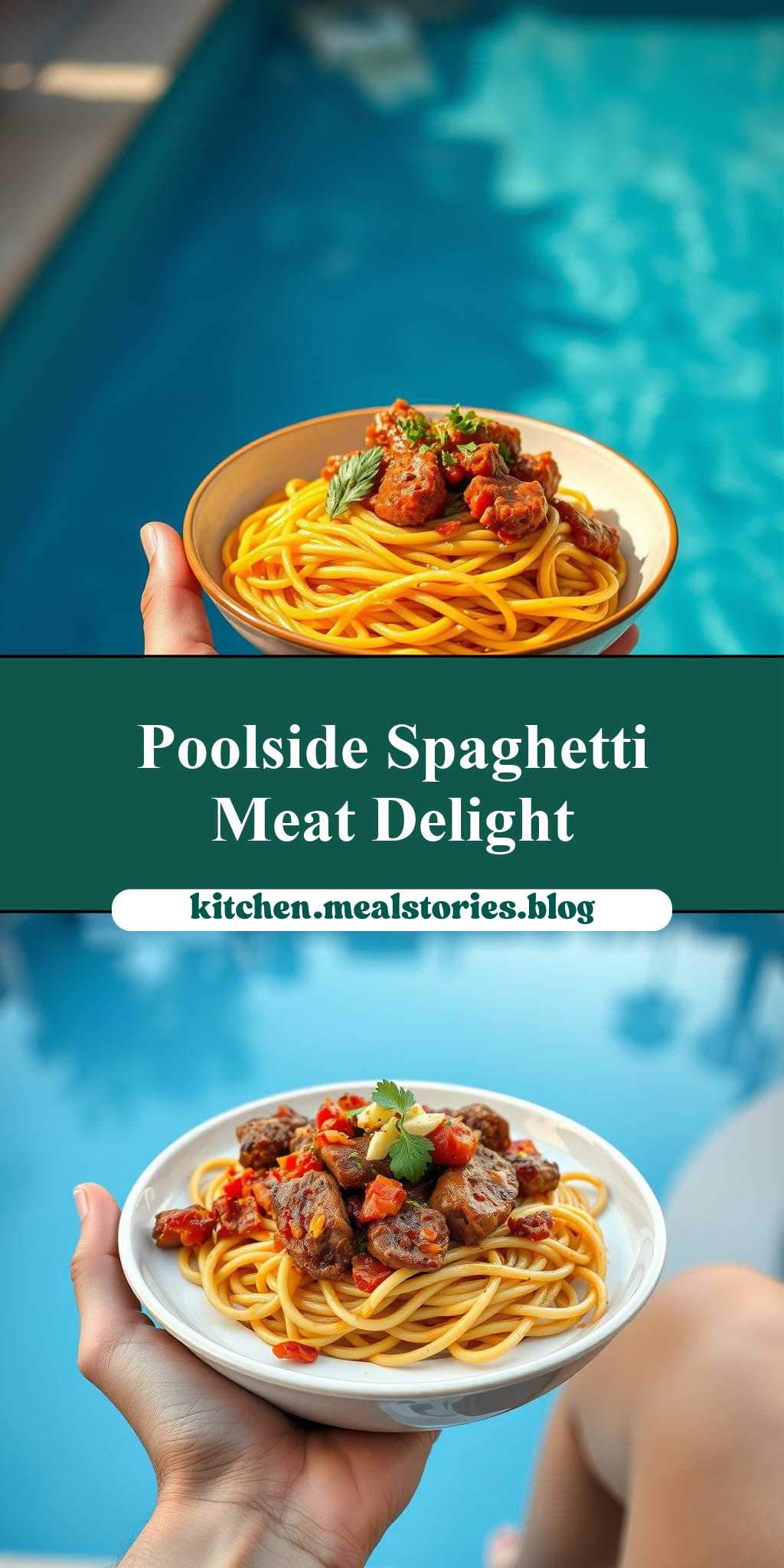
What’s the secret to a perfect summer dinner by the pool? This homemade spaghetti dish is a weeknight dinner favorite, loaded with tender meat, sautéed vegetables and a quick cooking method that’s sure to please, try making it at home and save this idea
a person holding a bowl of spaghetti with meat and vegetables on top, in front of a swimming pool
Introduction
Imagine the perfect summer evening: you’re lounging by the pool, surrounded by the warm glow of sunset, and in your hands, you’re cradling a bowl of steaming hot, deliciously flavored spaghetti, topped with savory meat and a medley of colorful vegetables. This dish is more than just a meal; it’s an experience that combines ease, flavor, and creativity, all using everyday ingredients that you might already have in your pantry. The beauty of this spaghetti recipe lies in its simplicity and versatility, allowing you to tailor it to your taste preferences and dietary needs with minimal fuss. Whether you’re a busy professional looking for a quick dinner solution or a parent seeking a dish that will please both kids and adults, this recipe for spaghetti with meat and vegetables is a winner. So, let’s dive into what makes this dish so special and how you can make it your own.
Why This Works
- Flavor balance and ingredient accessibility: The combination of spaghetti, meat, and vegetables offers a well-rounded flavor profile that is both satisfying and accessible. You can easily find these ingredients in most supermarkets, making it a practical choice for any day of the week.
- Ease of preparation: One of the standout features of this recipe is how straightforward it is to prepare. With a few simple steps, you can go from raw ingredients to a finished dish in about 30 minutes, perfect for those evenings when time is of the essence.
- Impressive results with minimal effort: Despite its simplicity, the presentation and taste of this spaghetti dish are impressive enough to serve at casual gatherings or special occasions. The key is in the layering of flavors and textures, which creates a dish that is greater than the sum of its parts.
Key Ingredients
The foundation of this recipe includes spaghetti as the base, ground meat (beef, pork, or a combination of the two) for the protein, and a variety of vegetables such as onions, bell peppers, and tomatoes. Olive oil serves as the primary cooking oil, and tomato sauce is used to bind the flavors together. For seasoning, you’ll need salt, pepper, and any other herbs or spices you prefer to add depth to your dish. Practical substitutions can be made based on what’s available and your dietary preferences; for example, using gluten-free spaghetti for those with gluten intolerance or substituting the meat with a vegetarian alternative like mushrooms or tofu.
Instructions
- Step 1: Begin by preparing your ingredients. Chop the onions and bell peppers into bite-sized pieces, mince any garlic you’re using, and measure out your spaghetti and tomato sauce.
- Step 2: Cook your spaghetti in boiling, salted water until it’s al dente. Meanwhile, in a large skillet, heat some olive oil over medium heat and add the ground meat. Cook until the meat is browned, breaking it up into small pieces as it cooks.
- Step 3: Once the meat is cooked, add the chopped onions and bell peppers to the skillet and sauté until they’re tender. Then, add the tomato sauce to the skillet, stirring to combine with the meat and vegetables. Let the sauce simmer for a few minutes to allow the flavors to meld together.
- Step 4: Drain the cooked spaghetti and add it to the skillet with the meat and vegetable sauce. Toss everything together to coat the spaghetti evenly, then serve hot, garnished with grated cheese and any additional vegetables or herbs you like.
Handy Tips
- One of the most helpful kitchen advice for this recipe is to not overcook the spaghetti. Al dente texture provides the best base for absorbing the flavorful sauce. Also, consider using high-quality ingredients, like fresh vegetables and a good tomato sauce, to elevate the dish.
Heat Control
Heat control is crucial in this recipe, especially when cooking the meat and spaghetti. For the meat, medium heat is ideal to prevent burning while ensuring it cooks through. For the spaghetti, a rolling boil is necessary, but be sure to check it frequently to avoid overcooking. The sauce should simmer gently to reduce slightly and intensify the flavors.
Crunch Factor
The crunch factor in this dish comes from the vegetables, particularly if you’re adding any raw or lightly cooked elements on top, like chopped bell peppers or a sprinkle of fresh parsley. To achieve the right texture, cook the vegetables just until they’re tender but still crisp. This balance of textures, from the soft spaghetti and sauce to the crunch of the vegetables, is what makes the dish engaging and satisfying.
Pro Kitchen Tricks
- One expert tip is to reserve some of the pasta water before draining the spaghetti. This starchy water can be added to the sauce if it becomes too thick, helping to achieve a perfect coating consistency. Additionally, using a mixture of ground meats can add depth to the sauce, and a splash of red wine can enhance the flavor if you’re looking for an adult twist.
Storage Tips
- For leftovers, store the spaghetti and sauce separately in airtight containers in the refrigerator for up to 3 days. Reheat the sauce gently and combine with the spaghetti just before serving. For longer storage, consider freezing the sauce and cooked spaghetti separately, reheating when needed.
Gift Packaging Ideas
If you’re considering gifting this dish, perhaps for a potluck or as a care package, packaging it in a way that maintains its freshness and appeal is key. Use a microwave-safe container for the spaghetti and sauce, and include some grated cheese and fresh herbs on the side. A decorative jar of homemade sauce or a bag of garlic bread on the side can make the gift even more special.
Flavor Variations
- Different spices: Adding a pinch of cumin or smoked paprika can give the dish a unique twist. For those who like heat, a diced jalapeño or red pepper flakes can add a nice kick.
- Creative toppings: Consider adding some roasted vegetables, a dollop of sour cream, or some toasted nuts to add texture and flavor contrast.
- Ingredient swaps: Swapping the ground meat for sautéed mushrooms or using different types of pasta can offer a refreshing change of pace.
Troubleshooting
- Texture problems: If the spaghetti is overcooked, it can become mushy. To avoid this, check it frequently during the cooking time. If the sauce is too thick, a bit of the reserved pasta water can thin it out.
- Ingredient replacements: If you’re missing an ingredient, consider what can be substituted without changing the flavor profile too much. For example, if you don’t have bell peppers, zucchini or carrots could work as alternatives.
- Over/undercooking signs: Keep an eye on the color and texture of the meat and vegetables. The meat should be browned and cooked through, and the vegetables should be tender but still crisp.
FAQs
- Can I freeze it? Yes, both the cooked spaghetti and the sauce can be frozen for later use. It’s best to freeze them separately for easier reheating.
- Is it gluten-free? The spaghetti can be substituted with gluten-free pasta to make the dish gluten-free. However, always check the ingredients of the tomato sauce to ensure it doesn’t contain gluten.
- Can I double the recipe? Absolutely, this recipe can be easily doubled or tripled for larger gatherings. Just remember to adjust the cooking time slightly if you’re dealing with a larger quantity of ingredients.
Conclusion
In conclusion, this recipe for spaghetti with meat and vegetables is a versatile and delicious option for any meal. Its ease of preparation, balanced flavors, and impressive presentation make it suitable for both everyday dinners and special occasions. Feel free to experiment with different ingredients and spices to make it your own, and don’t hesitate to share your creations with friends and family. The joy of cooking lies not just in the eating, but in the sharing and the love that goes into preparing a meal for others. So, go ahead, get creative, and enjoy the process of bringing people together through the simple yet profound act of sharing a meal.