
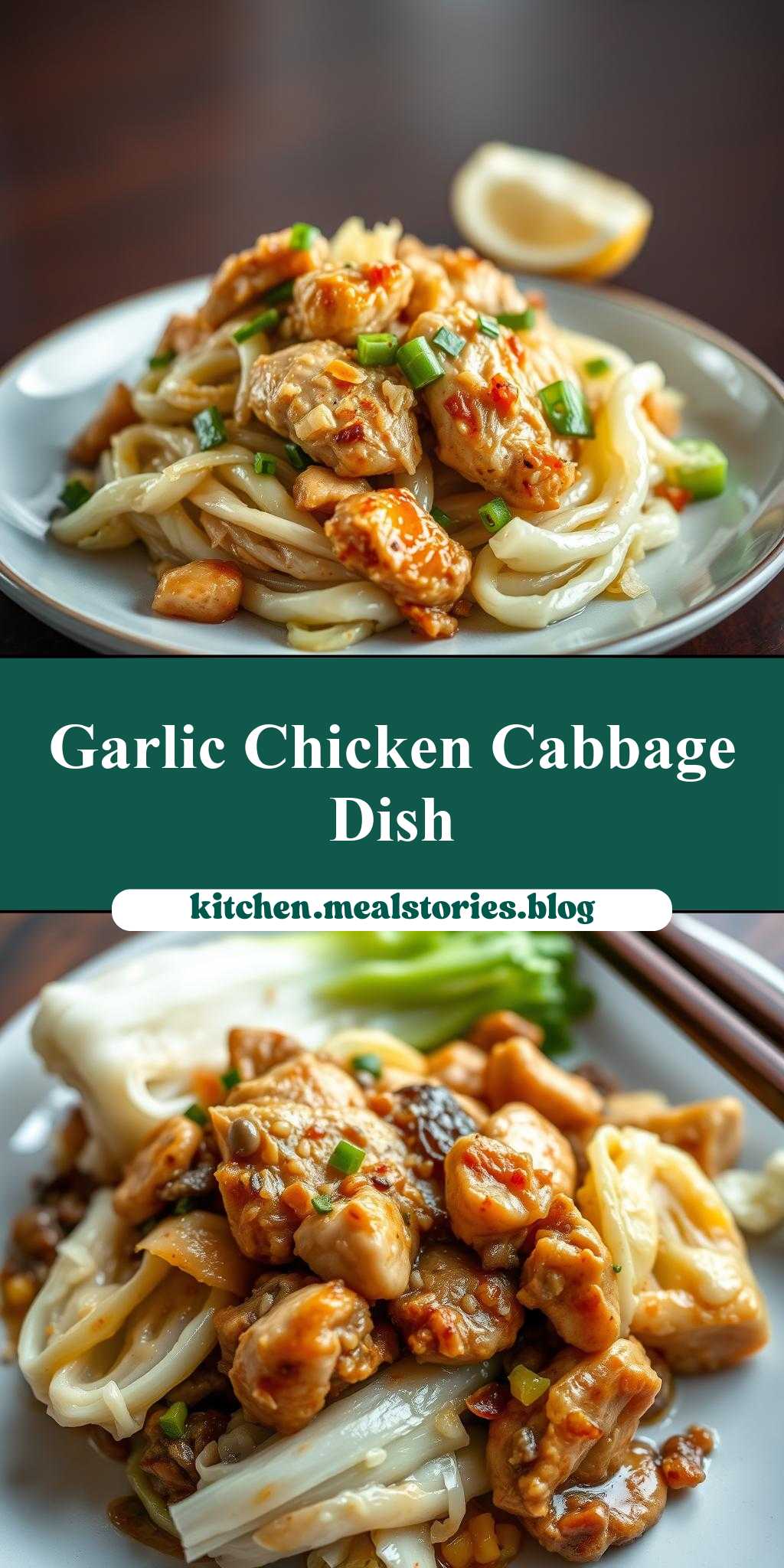
What makes a weeknight dinner truly unforgettable? The perfect blend of flavors and textures, like sautéed garlic cabbage paired with juicy chicken, makes for a quick and easy homemade meal that’s sure to become a family favorite. Save this idea for a deliciously simple weeknight dinner solution.
Sautéed Garlic Cabbage with Juicy Chicken
Introduction
This recipe for Sautéed Garlic Cabbage with Juicy Chicken is a masterclass in simplicity, flavor, and creativity, all while utilizing everyday ingredients that are likely already in your pantry. The combination of tender chicken, crunchy cabbage, and the depth of garlic is a match made in heaven, and the best part is how easy it is to prepare. Whether you’re a seasoned chef or a beginner in the kitchen, this dish is sure to impress with its balance of flavors and textures. The beauty of this recipe lies in its accessibility and the room it allows for creativity and personalization, making it a staple for any meal, from a quick weeknight dinner to a special occasion.
Why This Works
- Flavor balance and ingredient accessibility: The dish combines common ingredients in a way that elevates their natural flavors, making it both delicious and accessible.
- Ease of preparation: The steps are straightforward, and the cooking time is relatively short, making it perfect for busy days.
- Impressive results with minimal effort: Despite its simplicity, the dish presents well and tastes complex, thanks to the caramelization of the garlic and the juiciness of the chicken.
Key Ingredients
The main ingredients in this recipe include chicken breasts, cabbage, garlic, olive oil, salt, and pepper. For the chicken, you can use either boneless, skinless breasts or thighs, depending on your preference for white or dark meat. The cabbage can be either green or red, with green cabbage providing a slightly milder flavor. Garlic is a crucial component for its deep, rich flavor, and olive oil is used for sautéing. Salt and pepper are used for seasoning, but you can also add other herbs and spices to taste. Practical substitutions include using coconut oil instead of olive oil for a different flavor profile or adding other vegetables like carrots or bell peppers to increase the nutritional value and variety of the dish.
Instructions
- Step 1: Begin by preparing your ingredients. Chop the cabbage into thin strips and mince the garlic. Cut the chicken into bite-sized pieces and season with salt and pepper.
- Step 2: Heat a couple of tablespoons of olive oil in a large skillet over medium-high heat. Add the chicken to the skillet and cook until it’s browned on all sides and cooked through, about 5-7 minutes. Remove the chicken from the skillet and set it aside.
- Step 3: In the same skillet, add a bit more olive oil if necessary, then add the minced garlic. Cook the garlic for about 1 minute, until it’s fragrant and slightly caramelized. Add the chopped cabbage to the skillet, stirring to combine with the garlic and oil. Cook the cabbage for about 5 minutes, until it starts to soften and caramelize.
- Step 4: Return the chicken to the skillet and stir to combine with the cabbage and garlic. Cook for an additional 2-3 minutes, until the chicken is fully coated in the flavors of the cabbage and garlic. Season with additional salt and pepper to taste, then serve hot.
Handy Tips
- One of the most helpful tips for this recipe is to not overcook the cabbage. It should retain some crunch to provide a nice texture contrast to the juicy chicken. Also, be mindful of the heat when cooking the garlic to prevent it from burning.
Heat Control
Heat control is crucial in this recipe, especially when cooking the garlic and the chicken. For the garlic, medium heat is ideal to prevent burning while still achieving caramelization. For the chicken, medium-high heat is best for browning, but be sure to adjust the heat as needed to prevent overcooking. The cabbage cooks well at medium heat, allowing it to soften and caramelize slowly.
Crunch Factor
The crunch factor in this dish comes from the cabbage, which should be cooked until it’s tender but still crisp. To achieve this, cook the cabbage for the recommended time and avoid over-stirring, which can make it soggy. If you prefer a softer cabbage, you can cook it for a few minutes longer, but be cautious not to overcook it.
Pro Kitchen Tricks
- One pro trick is to use a cast-iron skillet for this recipe, as it retains heat well and can achieve a nice sear on the chicken. Another trick is to cook the chicken and cabbage in batches if necessary, to ensure that each piece has enough room to cook evenly.
Storage Tips
- For storing leftovers, cool the dish to room temperature, then place it in an airtight container in the refrigerator. It can be stored for up to 3 days. For reheating, simply place the desired amount in a microwave-safe bowl and heat until warmed through, or reheat in a skillet on the stovetop with a bit of oil until hot and crispy.
Gift Packaging Ideas
While this dish is primarily meant to be served hot and fresh, components of it can be gifted, such as a jar of caramelized garlic or a package of seasoned chicken breasts. For gifting, consider packaging the items in decorative jars or bags, tied with a ribbon and accompanied by a recipe card for the recipient to prepare the full dish.
Flavor Variations
- Different spices: Adding a sprinkle of paprika or a pinch of cayenne pepper can give the dish a smoky or spicy kick.
- Creative toppings: Consider adding some toasted nuts, dried cranberries, or a sprinkle of crumbled blue cheese to add texture and flavor contrast.
- Ingredient swaps: Swapping the chicken for shrimp or tofu can make the dish suitable for different dietary preferences, and using different types of cabbage or adding other vegetables can vary the flavor and nutritional content.
Troubleshooting
- Texture problems: If the cabbage becomes too soggy, it may have been overcooked. Try cooking it for less time in the future. If the chicken is dry, it may have been overcooked; ensure it’s cooked to the correct internal temperature.
- Ingredient replacements: If you don’t have garlic, you can substitute it with a small onion or shallots. For olive oil, avocado oil or grapeseed oil can be used as alternatives.
- Over/undercooking signs: Chicken should reach an internal temperature of 165°F (74°C) to be considered cooked. Cabbage is done when it’s tender but still crisp; overcooking will make it soggy.
FAQs
- Can I freeze it? Yes, you can freeze the cooked chicken and cabbage mixture. Simply cool it to room temperature, then place it in a freezer-safe container or bag. It can be frozen for up to 2 months. Reheat it in the microwave or on the stovetop when ready to serve.
- Is it gluten-free? Yes, this recipe is naturally gluten-free, making it suitable for those with gluten intolerance or sensitivity.
- Can I double the recipe? Absolutely, this recipe can be easily doubled or tripled to serve a larger crowd. Just ensure you have a large enough skillet to cook everything evenly.
Conclusion
In conclusion, the Sautéed Garlic Cabbage with Juicy Chicken recipe is a versatile, flavorful, and surprisingly easy dish to make. It’s perfect for a quick dinner or a special occasion, and its components can be adjusted to suit various tastes and dietary needs. Don’t be afraid to experiment with different spices, toppings, or ingredient swaps to make the dish your own. Whether you’re cooking for yourself or for a crowd, this recipe is sure to please, and with its straightforward instructions and handy tips, you’ll be enjoying a delicious, home-cooked meal in no time.