
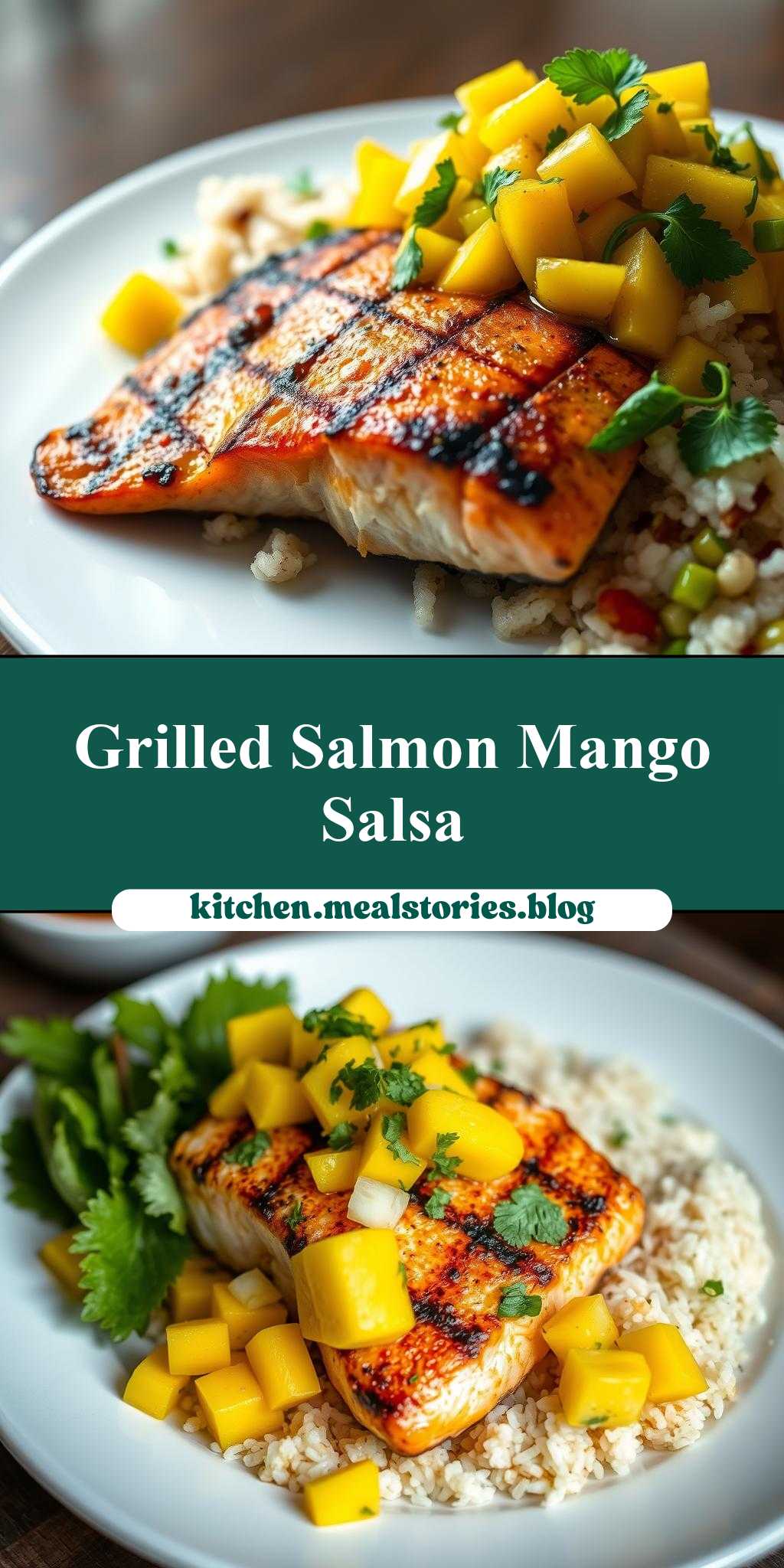
What makes a perfect summer dinner? Grilled salmon with a sweet and tangy mango salsa served over coconut rice is my go-to quick and easy weeknight dinner solution, featuring fresh mango and a flavorful grill method, save this idea for a homemade meal to enjoy with family.
Grilled Salmon with Mango Salsa & Coconut Rice
Introduction
Imagine a dish that combines the succulent flavor of grilled salmon, the sweetness of mango, and the creaminess of coconut rice, all in one delightful meal. This recipe for Grilled Salmon with Mango Salsa & Coconut Rice is not only a treat for your taste buds, but it’s also incredibly easy to make and requires minimal effort, making it perfect for a weeknight dinner or a special occasion. The beauty of this dish lies in its simplicity, using everyday ingredients to create something truly impressive and flavorful. Whether you’re a seasoned chef or a beginner in the kitchen, this recipe is sure to become a favorite, offering a balance of flavors and textures that will leave everyone wanting more.
Why This Works
- Flavor balance and ingredient accessibility: The combination of grilled salmon, mango salsa, and coconut rice offers a perfect balance of savory, sweet, and creamy flavors, all made with easily accessible ingredients.
- Ease of preparation: Despite its impressive presentation, this dish is surprisingly easy to prepare, requiring minimal cooking skills and effort.
- Impressive results with minimal effort: The combination of flavors and textures, along with the vibrant colors of the mango salsa, makes for a dish that looks and tastes like it was prepared by a professional chef, all with minimal fuss.
Key Ingredients
The key to this recipe lies in its main ingredients: fresh salmon fillets, ripe mangos, coconut milk, and aromatic spices. The salmon provides a rich source of protein, while the mango adds natural sweetness and a pop of color. Coconut milk enriches the rice, giving it a creamy texture and a subtle coconut flavor. For practical substitutions, you can use other types of fish like tilapia or mahi-mahi if salmon is not available, and pineapple can be used as an alternative to mango. However, the unique flavor profile of salmon and mango makes them the preferred choices for this dish.
Instructions
- Step 1: Begin by preparing the ingredients. Chop the mango into small pieces, dice the red onion, chop fresh cilantro, and measure out the coconut milk and spices. For the salmon, ensure it’s fresh and cut into portions if necessary.
- Step 2: Cook the coconut rice according to the package instructions, using coconut milk instead of water for added flavor and creaminess. While the rice is cooking, prepare the mango salsa by mixing together the chopped mango, red onion, jalapeño pepper, cilantro, and a squeeze of lime juice.
- Step 3: Grill the salmon fillets. Season the salmon with salt, pepper, and any other desired spices. Heat a grill or grill pan to medium-high heat and cook the salmon for about 4-5 minutes per side, or until it reaches your desired level of doneness. Meanwhile, toast some coconut flakes in a pan for garnish.
- Step 4: For the final touches, fluff the coconut rice with a fork and serve it alongside the grilled salmon. Top the salmon with a generous helping of mango salsa and garnish with toasted coconut flakes and additional cilantro if desired.
Handy Tips
- For the best flavor, use fresh and high-quality ingredients. Fresh mango and salmon will make a significant difference in the taste and texture of the dish.
- Don’t overcook the salmon. It should be cooked until it flakes easily with a fork but still retains its moisture.
- Adjust the level of heat in the mango salsa to your liking by using more or less jalapeño pepper.
Heat Control
When grilling the salmon, it’s crucial to control the heat to achieve the perfect doneness. Medium-high heat is ideal for grilling salmon, as it allows for a nice sear on the outside while cooking the inside through. The cooking time will depend on the thickness of the salmon fillets, but as a general rule, cook for 4-5 minutes per side. The salmon is done when it flakes easily with a fork and reaches an internal temperature of 145°F (63°C).
Crunch Factor
The crunch factor in this dish comes from the toasted coconut flakes and the fresh ingredients in the mango salsa. To achieve the perfect crunch, toast the coconut flakes in a dry pan over medium heat, stirring frequently, until they are lightly browned and fragrant. For the mango salsa, use fresh and crisp ingredients to maintain the texture.
Pro Kitchen Tricks
- Marinate the salmon in a mixture of olive oil, lemon juice, and your favorite spices for at least 30 minutes before grilling to enhance the flavor.
- Use leftover coconut rice and mango salsa to make delicious coconut rice bowls with grilled chicken or as a side dish for other meals.
- For easier cleanup, line the grill pan with aluminum foil before cooking the salmon, making it simpler to dispose of any leftovers and clean the pan.
Storage Tips
- Store leftover coconut rice in an airtight container in the refrigerator for up to 3 days. Reheat it in the microwave or on the stovetop with a little water to restore its creamy texture.
- Keep the mango salsa fresh by storing it in an airtight container in the refrigerator. It can be made ahead of time, but it’s best consumed within a day for optimal flavor and texture.
- Cooked salmon can be stored in the refrigerator for up to 2 days. Reheat it gently in the microwave or oven to prevent drying out.
Gift Packaging Ideas
If you’re considering gifting this dish, especially the mango salsa, it can be beautifully packaged in glass jars with a ribbon around the lid and a gift tag. The coconut rice and grilled salmon are best served fresh, but the salsa can be a lovely gift for friends and family, especially when paired with some crusty bread or crackers for a quick snack.
Flavor Variations
- Different spices: Experiment with various spice blends like cumin and coriander for a Middle Eastern twist or paprika for a smoky flavor.
- Creative toppings: Add some diced avocado or sliced almonds to the mango salsa for extra creaminess and crunch.
- Ingredient swaps: Use pineapple or peaches as alternatives to mango, and try different types of fish or even tofu for a vegetarian option.
Troubleshooting
- Texture problems: If the coconut rice becomes too dry, add a little more coconut milk. If the mango salsa is too runny, add more chopped mango or a little honey to balance the flavor.
- Ingredient replacements: If you can’t find fresh mango, use canned mango or even mango chutney as a substitute. For the salmon, any flaky fish can be used as an alternative.
- Over/undercooking signs: Ensure the salmon is cooked through but still moist. If it’s overcooked, it will be dry and flake apart too easily. Undercooked salmon will be raw in the center.
FAQs
- Can I freeze it? Yes, you can freeze the cooked salmon and coconut rice for up to 2 months. However, freezing the mango salsa is not recommended as it will lose its texture and flavor. Instead, make it fresh each time you serve the dish.
- Is it gluten-free? Yes, this recipe is naturally gluten-free, making it suitable for those with gluten intolerance or preference.
- Can I double the recipe? Absolutely, this recipe can be easily doubled or tripled for larger gatherings. Just ensure you have enough grill space for the salmon and adjust the cooking time accordingly.
Conclusion
In conclusion, Grilled Salmon with Mango Salsa & Coconut Rice is a recipe that embodies the perfect blend of flavor, ease, and creativity. It’s a dish that can be enjoyed by everyone, regardless of their cooking experience, and it offers a lot of room for experimentation and personalization. Whether you’re cooking for a special occasion or just a quick weeknight dinner, this recipe is sure to impress. So, don’t hesitate to give it a try, and feel free to share your own variations and tips in the comments below. Happy cooking!