
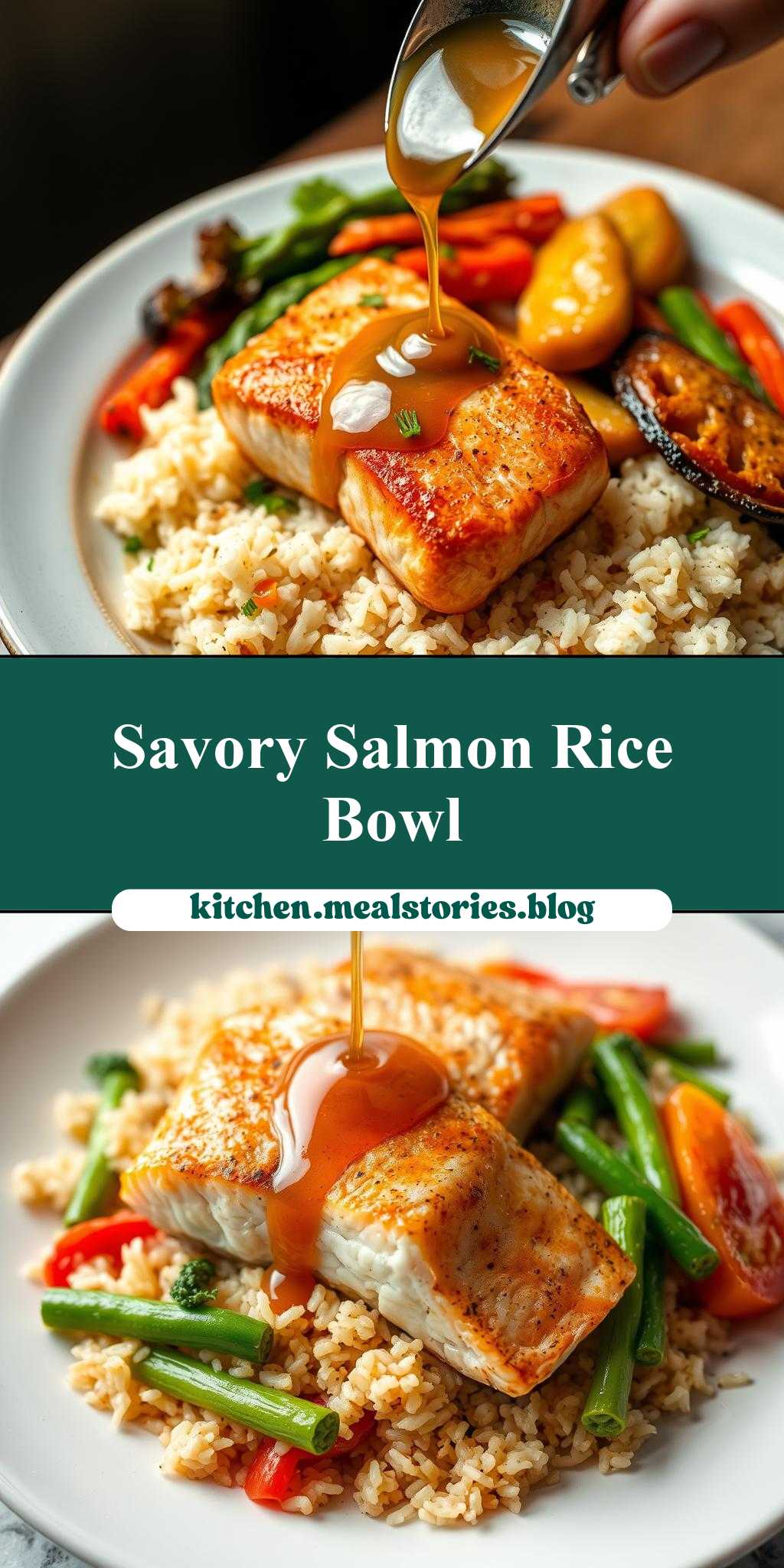
What makes a perfect weeknight dinner? When salmon, roasted vegetables and a side of fluffy rice come together with a rich homemade sauce, it’s a match made in heaven. Save this idea for your next easy family favorite meal to try soon.
Salmon, Rice, and Vegetables Drizzled with Sauce
Introduction
This delightful dish combines the richness of salmon, the subtle flavor of rice, and the vibrancy of vegetables, all brought together with a drizzle of savory sauce. What makes this recipe stand out is its ease of preparation, the balance of flavors, and the creativity it allows using everyday ingredients. It’s a perfect dish for a weeknight dinner or a special occasion, offering a blend of health, taste, and visual appeal that will impress anyone. With minimal effort, you can create a meal that’s not only delicious but also visually stunning, making it perfect for sharing with family and friends or enjoying on your own.
Why This Works
- Flavor balance and ingredient accessibility: The combination of salmon, rice, and a variety of vegetables ensures a balanced flavor profile, while using readily available ingredients makes it convenient to prepare.
- Ease of preparation: The steps involved are straightforward, from preparing the ingredients to cooking and finally drizzling with sauce, making it accessible to cooks of all levels.
- Impressive results with minimal effort: Despite its simplicity, the dish presents well and tastes complex, thanks to the blend of textures and flavors from the salmon, rice, vegetables, and the sauce.
Key Ingredients
The main ingredients for this dish include salmon fillets, which provide a rich source of protein and omega-3 fatty acids; rice, which serves as a neutral background to absorb the flavors; a variety of colorful vegetables such as bell peppers, carrots, and green beans, which add texture, flavor, and nutrients; and a savory sauce, which can be made from ingredients like soy sauce, olive oil, garlic, and ginger, offering a depth of flavor. Practical substitutions can include using different types of fish or protein sources, various vegetables based on seasonality and preference, and adjusting the sauce ingredients to suit dietary needs or taste preferences.
Instructions
- Step 1: Begin by preparing your ingredients. Chop the vegetables into bite-sized pieces, cook the rice according to the package instructions, and season the salmon fillets with salt and pepper.
- Step 2: Cook the salmon in a pan with a little olive oil until it’s cooked through, then set it aside. In the same pan, add more olive oil if needed and sauté the chopped vegetables until they’re tender but still crisp.
- Step 3: Prepare the sauce by mixing soy sauce, minced garlic, grated ginger, and a squeeze of fresh lemon juice in a bowl. You can adjust the quantities to taste. Once the vegetables are done, pour the sauce over them and stir to combine, allowing the flavors to meld.
- Step 4: To serve, place a portion of cooked rice on a plate, top it with a piece of salmon, add the sautéed vegetables alongside, and drizzle any remaining sauce over the top. Garnish with fresh herbs or sesame seeds for added flavor and visual appeal.
Handy Tips
- When cooking the salmon, make sure not to overcook it, as it can become dry. A good rule of thumb is to cook for 4 minutes per side for a fillet about an inch thick.
- For the sauce, you can also add a bit of honey or maple syrup to balance out the savory flavors with a touch of sweetness.
- Consider using leftover vegetables or adjusting the recipe based on what’s in season to keep the dish fresh and exciting.
Heat Control
When cooking the salmon and vegetables, it’s crucial to control the heat to achieve the perfect doneness. For salmon, medium-high heat is ideal for searing, then reducing to medium to finish cooking. For vegetables, medium heat allows for a gentle sauté that preserves their texture and color. Always check for doneness by flaking the salmon with a fork (it should flake easily) and checking the vegetables for tenderness.
Crunch Factor
Achieving the right texture, especially with the vegetables, is key to the dish’s appeal. By not overcooking the vegetables, you retain their crunch, which contrasts beautifully with the flaky salmon and soft rice. If you prefer a softer texture, you can cook the vegetables for a few more minutes, but be cautious not to make them too soft or mushy.
Pro Kitchen Tricks
- Marinating the salmon in a mixture of soy sauce, lemon juice, and herbs for about 30 minutes before cooking can enhance its flavor and moisture.
- Using a variety of vegetables not only adds color to the dish but also ensures a range of textures and flavors, making each bite interesting.
- For an extra crispy skin on the salmon, pat it dry with a paper towel before cooking and make sure the pan is hot before adding the fish.
Storage Tips
- Leftovers can be stored in the refrigerator for up to 2 days. It’s best to store the components separately (salmon, vegetables, and rice) to maintain their textures.
- Reheating can be done in the microwave or on the stovetop. For the microwave, cover the dish to retain moisture, and for the stovetop, add a little water or sauce to prevent drying out.
- Consider using glass containers for storage, as they are non-reactive and can be safely used for reheating in the microwave or oven.
Gift Packaging Ideas
If you’re considering gifting this dish, perhaps for a potluck or as a care package, you can package the components separately in decorative containers or jars. Use a small jar for the sauce, a larger container for the rice and vegetables, and wrap the salmon in parchment paper or aluminum foil. Add a ribbon or a gift tag with heating instructions for a personal touch.
Flavor Variations
- Different spices: Experiment with various spice blends like cumin for a Mexican flair, curry powder for an Indian twist, or paprika for a smoky flavor.
- Creative toppings: Add some toasted nuts or seeds for crunch, diced fresh herbs for freshness, or grated cheese for an extra layer of flavor.
- Ingredient swaps: Try using different types of fish or protein sources like tofu or tempeh for a vegetarian or vegan version, or swap out rice for another grain like quinoa or barley.
Troubleshooting
- Texture problems: If the salmon is too dry, it might have been overcooked. If the vegetables are too soft, they might have been overcooked as well. Adjust cooking times accordingly.
- Ingredient replacements: If you can’t find a specific ingredient, look for substitutes that offer similar flavors or textures. For example, you can use broccoli instead of green beans.
- Over/undercooking signs: Always check your food as you cook. Salmon should flake easily, vegetables should be tender but crisp, and rice should be cooked but not mushy.
FAQs
- Can I freeze it? Yes, you can freeze the cooked salmon and vegetables, but it’s best to freeze them separately to maintain texture. The sauce can also be frozen, but it’s best used fresh for optimal flavor.
- Is it gluten-free? The dish can be gluten-free depending on the ingredients used in the sauce. Make sure to use gluten-free soy sauce or tamari, and check the ingredients of any store-bought components.
- Can I double the recipe? Yes, you can easily double or triple the recipe for larger groups. Just ensure you have enough pans or cooking space to accommodate the increased quantity.
Conclusion
This recipe for salmon, rice, and vegetables drizzled with sauce is a versatile and delicious option for any meal. With its balance of flavors, ease of preparation, and potential for creativity, it’s a dish that can be enjoyed by everyone. Feel free to experiment with different ingredients, spices, and presentation styles to make it your own. Whether you’re a seasoned cook or just starting out, this dish is sure to become a favorite. So go ahead, get creative, and enjoy the process of cooking and sharing this wonderful meal with others.